That blog post, which is a great summary of the role, can be put into simpler words like this:
Simply Stated: The Job of an Educational Diagnostician
An educational diagnostician is a special kind of expert in schools. Their main job is to figure out why a student is having a hard time learning and then help create a plan to fix it.
What Exactly Do They Do?
Think of them as a learning detective. They specialize in finding out if a child has a learning disability—like dyslexia or a processing disorder—or other challenges that make school difficult.
- Testing and Assessment: They give students special tests and look at schoolwork and history to get a full picture of their strengths and weaknesses.
- Figuring it Out (Diagnosis): They look at all the test results (the data) and decide if the student qualifies for special help under laws like the Individuals with Disabilities Education Act (IDEA).
- Team Player: They work closely with teachers, parents, and other staff to create an Individualized Education Program (IEP). This plan lists the specific help, tools, and teaching methods the student needs.
- Checking Progress: They watch to see if the plan is working and recommend changes if the student needs a different kind of support as they grow.
Diagnostician vs. School Psychologist
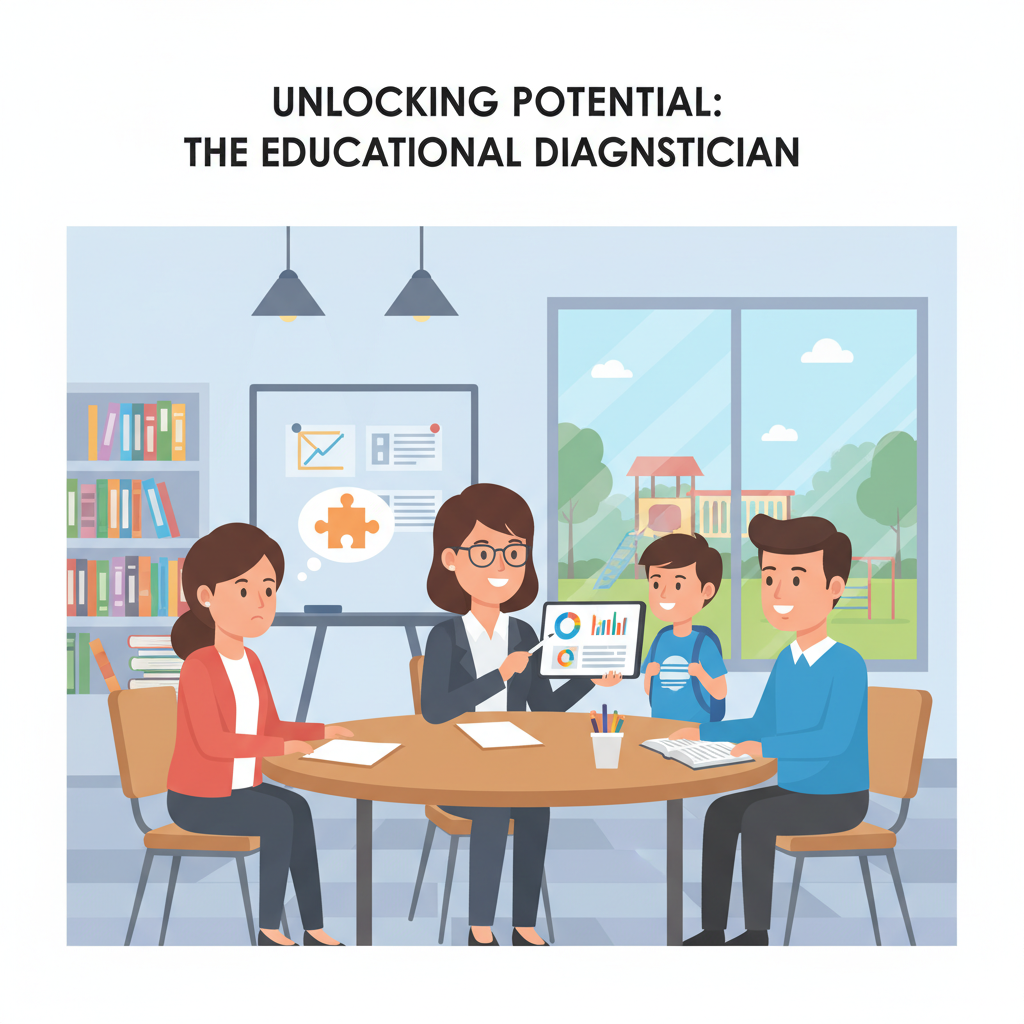
While both help students, their focus is different:
- Diagnostician: Focuses mostly on academic learning and school performance. They want to know how a student learns and why they might be struggling with reading, writing, or math.
- School Psychologist: Focuses more on emotions, behavior, mental health, and counseling.
They often work together, but the diagnostician is the expert in learning disabilities.
Why Are They So Important?
For students who are struggling, an educational diagnostician is often the first step to success.
- Finding Problems Early: They can identify issues early on. When a problem is found sooner, the help is more effective, saving the student from years of frustration.
- Personalized Help: They ensure students get help tailored exactly to their needs, instead of a one-size-fits-all approach.
- Advocates: They are key advocates for students, ensuring the school follows all the legal rules for special education.
How to Become One
It takes specific training to become an educational diagnostician:
- Get a teaching degree.
- Spend a few years teaching in a classroom (often in special education).
- Get a Master’s Degree specifically in Educational Diagnostics or Special Education.
- Pass a state-required certification exam to get the official title.
In short, the educational diagnostician is a vital professional who helps unlock the potential of every student by clearly identifying their unique learning challenges and creating a clear path for them to succeed in school.