Here is the passage written in simpler, more direct words:
“Sure! Here’s a 1000-word blog on “Education and Schooling” written in a clear, teen-friendly style but still professional enough for assignments or publishing.
📚 School and Learning: Your Blueprint for the Future
Education has always been super important for society. It changes how people think, act, solve problems, and help the world. When you hear “education,” you probably think of school: classrooms, teachers, books, and tests. But education is actually much bigger than that. School is just one piece of the puzzle. Learning happens all the time, for your whole life. Knowing the difference between “education” and “schooling” helps us understand why both matter and how they should change for your generation.
Education: It’s Not Just About Grades
Education is the big process of getting smart, learning new skills, and figuring out your values. It can happen anywhere: at home, in your neighborhood, online, or just from personal experiences.
- A kid who learns to be kind from their parents is getting educated.
- A student who gets confidence from giving a presentation is getting educated.
- A teen learning to edit videos on YouTube is getting educated.
This wide view means education isn’t just about passing tests. It includes learning how to talk to people, make good choices, work on a team, and handle changes. These “life skills” are often just as key as your classroom subjects. Many successful people say they owe their success to things they learned outside of school, not just inside.
Schooling: The Organized System
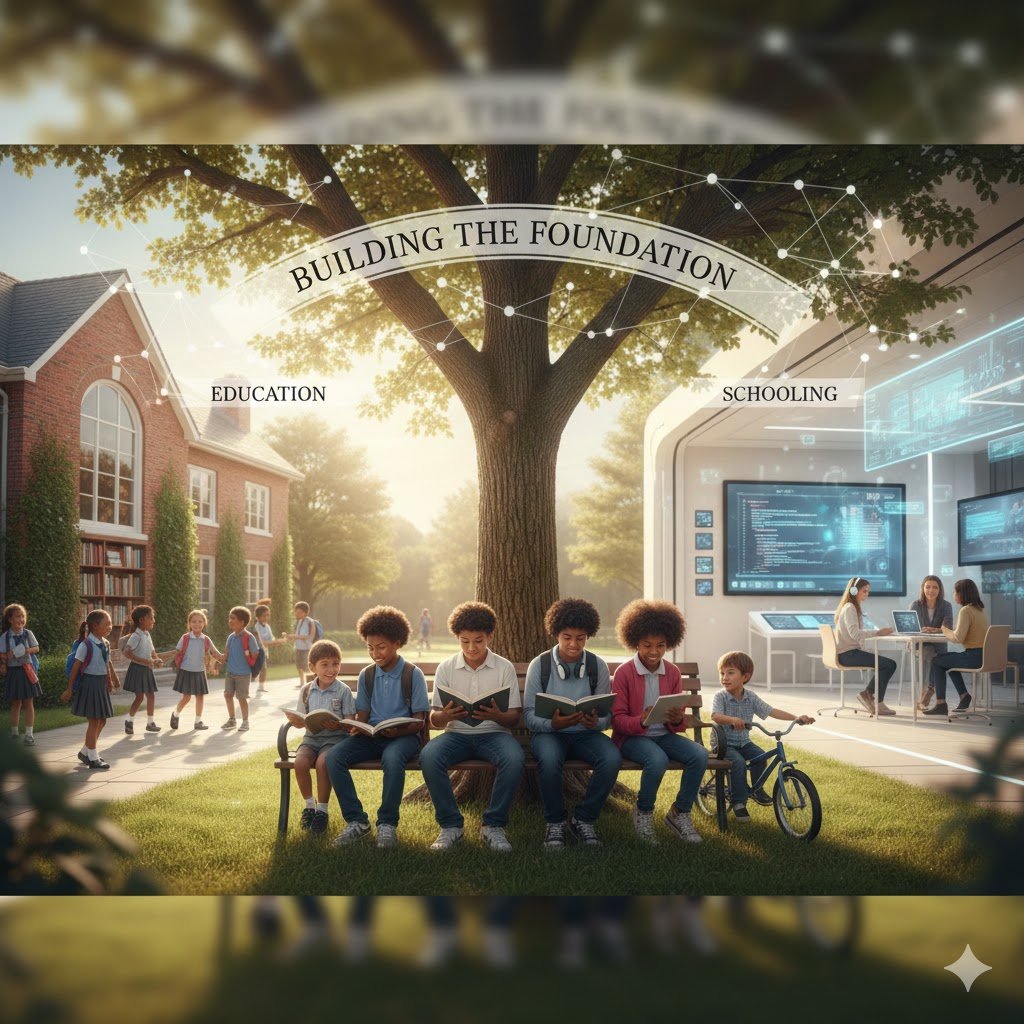
Schooling, on the other hand, is the official, structured system set up by governments and groups to teach students in an organized place (the school building). Schools use a standard plan, or curriculum, so everyone learns similar subjects—like Math, Science, English, and History.
The main goals of school are to:
- Teach you basic reading and math.
- Help you think critically (ask why).
- Teach you how to socialize and talk to others.
- Get you ready for college or a job.
- Make sure every child gets a fair chance to learn.
Because schooling is formal and organized, it’s essential. It makes sure every child gets a basic, quality education. Without schools, many kids—especially those from poorer families—might not get a chance to learn at all.
Schools Must Keep Up with the Modern World
Long ago, schools mainly trained people for simple, routine jobs in factories or offices. The world today is completely different. Technology moves fast, creating new fields like AI, digital marketing, and green energy. This means schools have to change to prepare you for jobs that might not even exist yet!
Modern learning is starting to focus more on:
- Being creative and coming up with new ideas.
- Solving problems (not just doing homework problems).
- Digital skills (using tech safely and smartly).
- Working together and sharing ideas.
- Emotional smarts (understanding feelings and relationships).
Schools are becoming places where you learn how to think, not just what facts to remember.
How Schooling and Education Work Together
Even though they are different, they are linked. Schooling gives you the structure and rules you need to learn the basics. Education—both formal and informal—helps you use those basics in real life.
For example:
- School teaches you grammar rules; reading books at home helps you become creative and a better talker.
- School teaches you math; budgeting your allowance teaches you real-world money skills.
- School teaches you science facts; watching documentaries or experimenting at home builds curiosity.
When school lessons and personal learning work together, you become a well-rounded person ready for the future.
Challenges Schools Face Today
Even with good intentions, school systems around the world have big problems:
1. Outdated Subjects: Many school plans haven’t been updated. Students sometimes learn old concepts but miss essential modern skills like coding, online safety, or managing money.
2. Too Much Stress: Students feel huge pressure to get perfect grades. This focus on scores instead of understanding causes stress, burnout, and fear of failure. Learning should be about improving, not just beating others.
3. Unequal Access: Not everyone gets the same quality of schooling. Things like family income, where you live, and any disabilities can limit learning chances. Fixing this fairness gap is a major challenge.
4. Not Enough Teacher Support: Teachers are the backbone of schools, but many deal with huge classes, too few supplies, and low pay. Supporting teachers means better education for everyone.
The Rise of Online Learning
A massive change is the use of digital tools. Online classes, educational videos, e-books, and apps have changed how people learn. During the pandemic, millions had online school for the first time. This showed that you don’t always need a physical classroom to learn well.
Online learning helps students:
- Learn at a speed that works for them.
- Get information from all over the world.
- Study subjects their local school doesn’t offer.
- Become more independent and tech-savvy.
However, online learning also showed the “digital divide”—lots of students still don’t have good internet or computers. This is another problem leaders need to fix.
Why Learning Is Key for the Future
A good education creates smart citizens who can think for themselves, respect differences, and help their community. Educated people tend to:
- Earn more money.
- Make healthier life choices.
- Help their communities grow.
- Invent things and solve problems.
- Be active in politics and society.
Education isn’t just a personal benefit; it helps entire countries. Nations with educated people usually have stronger economies, better health systems, and more stable governments.
Conclusion: Building a Better Tomorrow
Education and schooling are very connected, but they have different roles. Schooling gives you rules, discipline, and basic facts. Education—both inside and outside school—shapes your character, values, and life skills. Today’s goal is to mix both in a balanced way.
As the world changes, so must our education systems. The future of learning should prioritize creativity, fairness, mental well-being, and real-world skills. By improving how we learn and teach, we are not just getting students ready for tests—we are getting them ready for life.
I can also make this shorter, longer, more formal, or format it like a school assignment or SEO-friendly blog if you’d like